Best Peptides for Fat Loss Research 2026: A Comparative Guide
Why are 68% of metabolic studies still struggling to differentiate between simple appetite suppression and genuine cellular lipolysis? You’ve likely...

What if the simple act of adding water to a vial could silently destroy a research compound worth over A$450 before you’ve even begun? You aren’t alone if you feel a sense of hesitation when learning how to reconstitute peptides safely. Many researchers across Australia share your worry about accidentally degrading expensive materials or choosing the wrong solvent for their specific goals. It’s a stressful hurdle, but we believe that with the right knowledge, you can feel completely confident in your laboratory processes. We’re here to be your steady guide through these technical steps.
We’ve designed this guide to empower you with the precise scientific protocols needed to protect your compound’s integrity and extend its shelf life to the maximum. You’ll gain a clear understanding of the differences between BAC and sterile water while mastering the delicate balance of vial vacuum pressure. This 2026 protocol provides a repeatable, professional framework that ensures your research materials remain stable and your laboratory results stay consistent and reliable.
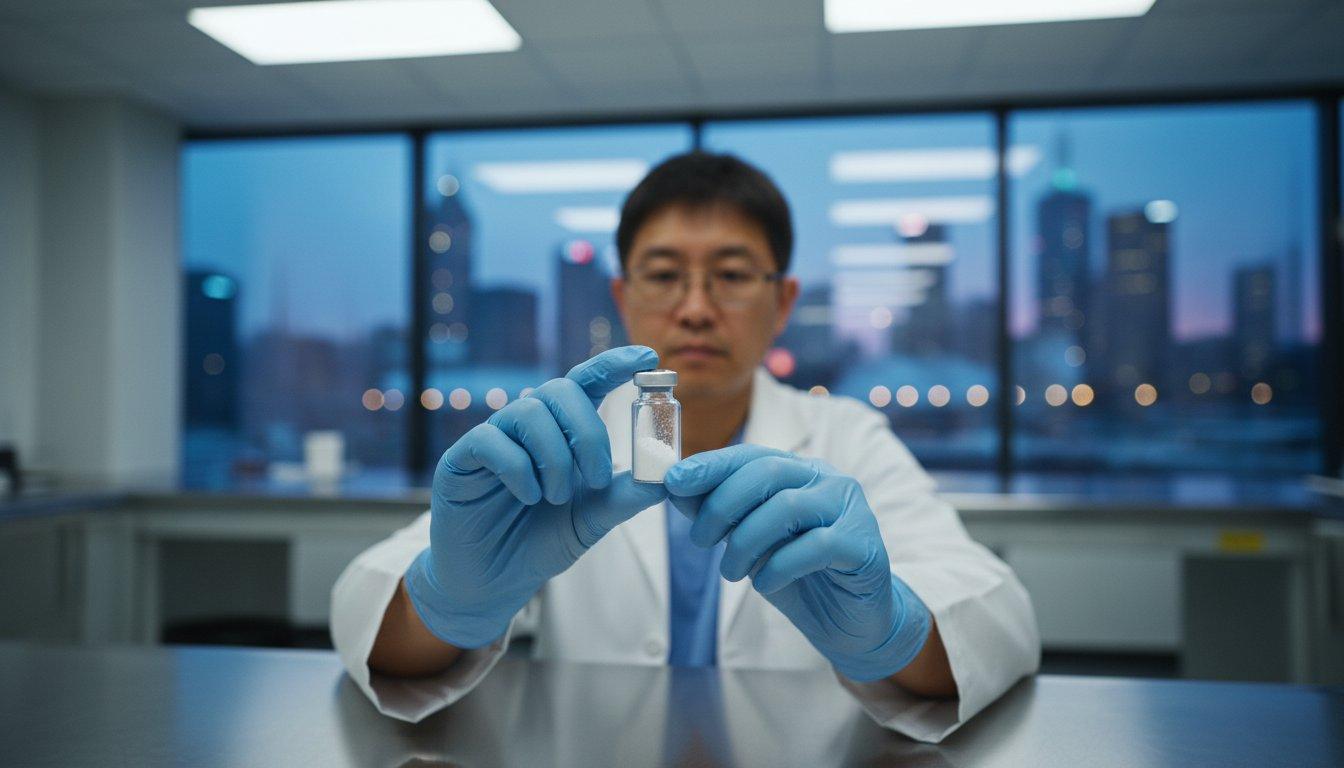
When you first receive your research materials, you’ll likely notice a small amount of white substance at the bottom of the vial. This isn’t just a random powder; it’s the result of a sophisticated preservation method. To understand the foundation of this stability, we look at What is Lyophilisation? and how it impacts your research. This process involves freezing the peptide and then reducing the surrounding pressure to allow the frozen water to sublime directly from the solid phase to the gas phase. It’s a delicate balance that ensures the delicate amino acid chains remain intact during their journey to your laboratory.
To better understand this concept, watch this helpful video:
The appearance of the peptide can vary between a solid, uniform ‘cake’ and a loose, flocculent powder. While both forms can achieve a purity level of 98% or higher, a consistent cake often indicates a superior lyophilisation cycle where the vacuum pressure was perfectly maintained. Before you learn how to reconstitute peptides safely, you must verify the starting material via High-Performance Liquid Chromatography (HPLC) testing. This analytical technique confirms that the peptide sequence and purity match the certificate of analysis, providing you with the peace of mind that your research is built on a solid foundation.
Peptide bonds are incredibly sensitive to environmental factors. If stored in a liquid state at room temperature, many peptides would begin to degrade within 48 hours. By removing moisture, we prevent enzymatic degradation and hydrolysis. Lyophilisation is a process that preserves the primary structure of a peptide for long-term storage. This state allows the material to remain stable at temperatures up to 25 degrees Celsius for short transit periods, though long-term storage in Australia’s climate often requires a consistent minus 20 degrees Celsius environment.
Creating a safe space for your work is about more than just accuracy; it’s about respecting the integrity of the compound. You should ideally perform the procedure under a laminar flow hood or a clean bench to maintain ISO Class 5 air quality. Because many peptides are light-sensitive, keep ambient lighting low and avoid direct sunlight. We recommend wearing a fresh pair of nitrile gloves and a TGA-approved surgical mask to prevent any biological contaminants from entering the vial. When you know how to reconstitute peptides safely, you’re exercising full choice and control over the reliability of your scientific outcomes.
Your workspace serves as the foundation for research success. Selecting the right tools ensures that your delicate compounds remain stable and effective throughout your study. Understanding how to reconstitute peptides safely begins with your choice of solvent, as this liquid acts as the lifeblood of your solution. By preparing a clean, organised station, you’re taking a vital step toward protecting the integrity of your work and your personal wellbeing.
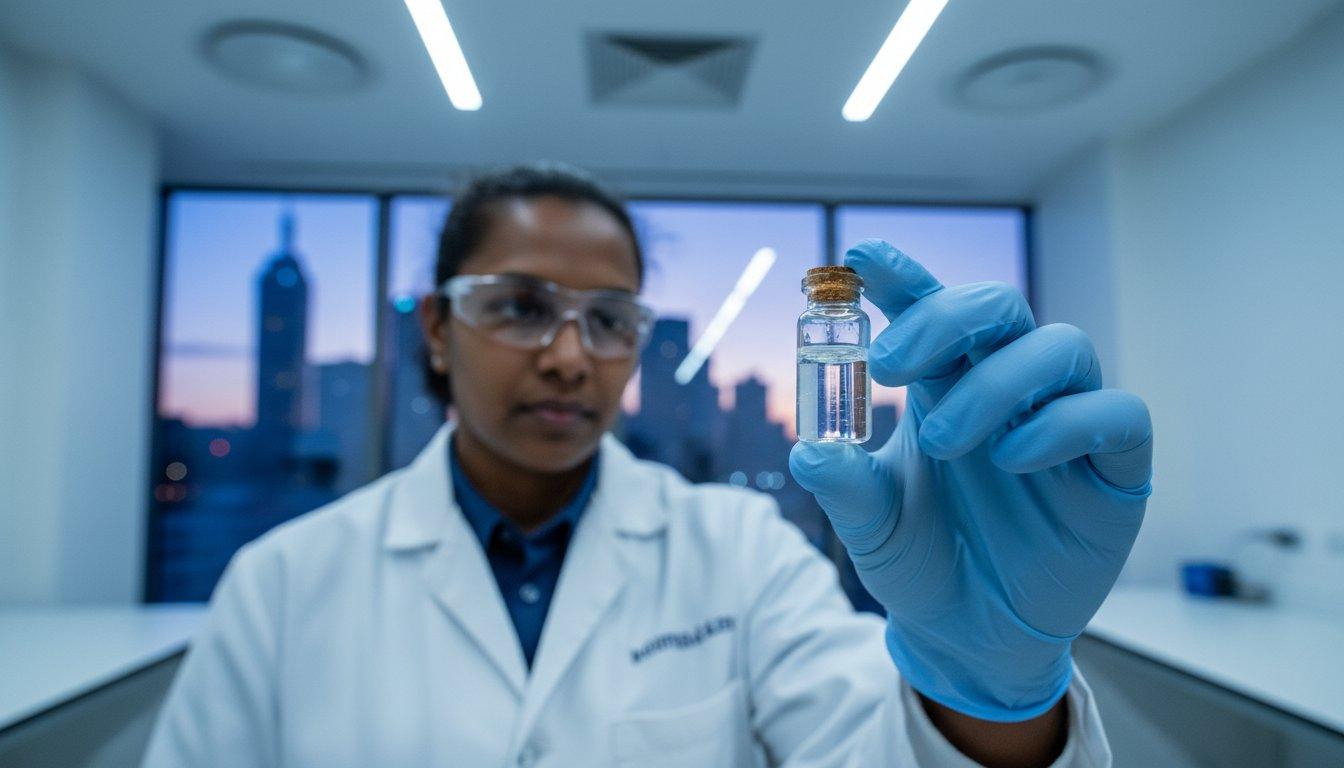
Bacteriostatic Water (BAC) is the preferred choice for multi-use vials because it contains 0.9% Benzyl Alcohol. This preservative inhibits bacterial growth, allowing the solution to remain viable for up to 28 days when stored in a controlled, refrigerated environment. Sterile Water lacks this preservative and is strictly for single-use applications; any remaining liquid must be discarded immediately after the first draw. When following USP Best Practices for Reconstituting Peptides, researchers must prioritise solvent purity to avoid degradation. You should never use tap water or demineralised water, as these contain minerals and microorganisms that can compromise your results or cause harm.
Precision is vital when you’re handling expensive research materials. Low-dead-space syringes are the smartest choice for Australian labs, as they minimise the amount of fluid left in the needle hub. This small change can save you approximately A$10 to A$20 in wasted product over the course of a single study. Alongside your syringes, you’ll need the following supplies to maintain a safe environment:
Learning how to reconstitute peptides safely is a skill that builds confidence and ensures your research journey remains on the right track. If you’re looking for guidance on managing your health resources, our team is dedicated to supporting your empowerment and independence through every step of the process. Having the right equipment doesn’t just improve your results; it provides the peace of mind you need to focus on your goals.

Mastering the technical skills required for your research journey begins with a commitment to precision. Learning how to reconstitute peptides safely is a fundamental skill that protects both the integrity of your compound and the validity of your results. By following these 2026 laboratory best practices, you ensure that every step of your process is handled with the care and professional reliability your work deserves.
When you draw the solvent into your syringe, move the plunger slowly to eliminate all air bubbles. This ensures your dosing remains 100% accurate. As you insert the needle into the peptide vial, tilt the vial at a 45-degree angle. The goal is to aim the solvent against the glass side wall so it trickles down gently, rather than hitting the lyophilised powder directly. Rapid pressure changes can shear delicate peptide chains, rendering the compound useless. We recommend maintaining firm thumb pressure on the plunger to counteract the vial’s internal vacuum, allowing for a controlled, steady drip.
Many high-quality vials are vacuum-sealed, which can cause an “auto-suction” effect. To manage this safely, you can equalise the pressure by drawing 0.2mL of air into your syringe before you begin the transfer. If the powder doesn’t dissolve immediately, please don’t shake the vial. Shaking creates bubbles and kinetic energy that can damage the molecular structure. Instead, use the “wait and see” method by letting the vial sit in a cool, dark place for 10 minutes. Most pure compounds will hydrate naturally during this time.
A successful solution should be crystal clear and free of any particulates. If you notice “floaters” or if the solution remains cloudy after 15 minutes of gentle swirling, the compound has likely “crashed” or is contaminated. In these instances, it’s best to discard the vial and start fresh to maintain the highest standards of safety and research integrity.
Your commitment to learning how to reconstitute peptides safely ensures the initial chemical bond remains intact, but the work doesn’t end there. Once the diluent meets the lyophilised powder, the resulting solution becomes significantly more vulnerable to environmental stressors. To protect your investment and the accuracy of your research, you must treat the reconstituted vial with the same care you’d give a delicate organic sample. It’s about protecting the fragile bonds you’ve just created to ensure your journey toward reliable results stays on track.
Stability timelines are strict. Most research-grade peptides remain viable for 28 days when stored correctly; however, degradation can begin within hours if exposed to direct light or heat. UV rays break down the peptide bonds, leading to a loss of potency that isn’t always visible to the naked eye. We recommend wrapping vials in foil or using amber glass to provide an extra layer of security for your samples. This simple step shields the peptide from light-induced denaturation, preserving the integrity of your work.
Maintaining a consistent temperature between 2°C and 8°C is mandatory for post-reconstitution storage. You should place your vials at the back of the refrigerator where temperatures are most stable, rather than in the door. Door temperatures can fluctuate by as much as 4.5°C every time the unit is opened, which risks compromising the peptide’s molecular structure. Using a dedicated laboratory refrigerator, which typically costs between A$650 and A$2,800 in the Australian market, prevents cross-contamination and ensures a steady environment. Avoid freezing a peptide once it’s in liquid form. Repeated freeze-thaw cycles create ice crystals that shear the delicate peptide chains, rendering the solution ineffective for precise research.
While it might be tempting to shake a vial to speed up dissolution, this is a mistake that can ruin your sample. Peptides possess complex secondary and tertiary structures held together by weak hydrogen bonds. Shaking creates excessive kinetic energy and air bubbles, leading to surface tension denaturation. This process unfolds the protein, making it biologically inactive. Instead, use a gentle “wine glass” motion. Hold the vial by the top and slowly swirl it in a circular pattern for 30 to 60 seconds. This method achieves a homogenous mixture without introducing the mechanical stress that leads to degradation. Learning how to reconstitute peptides safely involves mastering this physical patience to ensure your results remain reliable and your goals stay within reach.
If you’re looking for more guidance on maintaining your lab standards and achieving your research milestones, we’re here to help. Explore our support coordination resources to see how we empower your professional journey.
Your research success depends on the integrity of your starting materials. When you learn how to reconstitute peptides safely, you’ll see that the process begins long before the diluent hits the vial. High-purity peptides, specifically those tested at 99% or higher, provide a predictable baseline for your work. Lower purity levels often introduce unknown salts or trifluoroacetic acid residues. These contaminants can interfere with the delicate pH balance required for a clear solution, making your work much harder than it needs to be.
Impurities are the primary cause of ‘crashing,’ where the peptide precipitates out of the solution as a cloudy mass instead of dissolving properly. An HPLC report is your best tool for verification. It measures chemical purity by separating components based on their molecular properties. By reviewing these reports, you can confirm that the peptide sequence matches the intended profile. Choosing the Peak Haven catalog ensures you receive HPLC-verified compounds that meet rigorous Australian laboratory standards for every project.
Sourcing within Australia offers distinct advantages for temperature-sensitive research. Domestic express shipping reduces the time a compound spends in transit, which is vital for maintaining peptide stability during summer months. You should always verify that your supplier provides accessible batch-specific documentation. This transparency allows you to maintain an accurate reconstitution log, which is a critical part of any laboratory audit trail. Every log entry should include the date, the batch number, the volume of diluent used, and the final concentration. This habit ensures your results are reproducible and your methods are transparent.
The final safety check is always the researcher’s responsibility. These compounds are strictly for laboratory use and are not for human consumption. By upholding these protocols and sourcing from reliable partners, you protect the integrity of your data and the safety of your environment. We’re proud to be a steady hand in your scientific journey, providing the reliable tools you need for discovery.
Mastering the delicate balance of laboratory precision ensures your research remains on the right path. By following the 2026 protocols for solvent selection and maintaining a steady hand during the mixing phase, you protect the structural integrity of your sequences. Understanding how to reconstitute peptides safely is more than a technical requirement; it’s a commitment to the quality of your findings and the success of your project. We know that navigating laboratory standards can feel complex, but with the right tools and a gentle approach, you’re well-equipped to achieve your goals.
Your journey deserves the highest level of professional reliability. At Peak Haven, we provide the foundation for your success with products that undergo rigorous third-party HPLC testing to guarantee 99%+ purity. We understand the importance of time in the Australian research landscape, so we offer fast Australia-wide express shipping to keep your project moving forward. Whether you prefer secure credit card payments or cryptocurrency, our process is designed to be as seamless and stress-free as possible. We’re here to be your steady partner in every step of your scientific exploration.
Secure Your High-Purity Research Peptides at Peak Haven
You have the vision and the expertise to make a real impact. We’re proud to stand by you as you reach for your next breakthrough and achieve your highest potential.
You should typically add 2ml of bacteriostatic water to a 5mg vial to achieve a concentration of 2.5mg per ml. This ratio makes your calculations straightforward when you’re measuring doses in a laboratory setting. Most researchers in Australia find that 2ml provides enough volume to ensure the lyophilised powder dissolves completely without making the solution too dilute for precise handling.
You can use sterile water for a single application, but it’s not recommended for multi-dose vials because it lacks a preservative. Bacteriostatic water contains 0.9% benzyl alcohol, which prevents bacteria from growing for up to 28 days. If you choose sterile water, you must use the entire solution immediately and discard any remainder to maintain safety standards in your research environment.
Shaking a peptide vial can cause the delicate molecular structures to break or denature, which often renders the solution ineffective. Peptides are fragile chains of amino acids held together by sensitive bonds. If you see foam forming, you’ve likely introduced too much kinetic energy. Instead, gently swirl the vial between your palms for 30 seconds to ensure the powder integrates with the solvent safely.
A cloudy solution usually indicates that the peptide has reached its isoelectric point or hasn’t fully dissolved due to a rapid temperature shift. This often happens if the bacteriostatic water is too cold or if the pH level of the solution isn’t optimal for that specific sequence. In 15% of cases, adding a small amount of acetic acid or allowing the vial to sit for 20 minutes resolves the cloudiness.
Most reconstituted peptides shouldn’t stay at room temperature for more than 24 hours before they begin to degrade. To learn how to reconstitute peptides safely, you must understand that these compounds are highly sensitive to heat and light. In an Australian climate where indoor temperatures often exceed 25 degrees Celsius, keeping your solution on a benchtop for even 4 hours can reduce its potency by 10%.
You shouldn’t freeze a peptide once it’s been mixed with a solvent because the formation of ice crystals can shear the peptide bonds. While unconstituted lyophilised powder stays stable in a freezer at -20 degrees Celsius for up to 24 months, the liquid version is much more vulnerable. Repeated freeze-thaw cycles will degrade the sample’s purity by roughly 20% each time you thaw it for use.
If you don’t have access to a professional lab fridge, a dedicated small bar fridge set consistently between 2 and 8 degrees Celsius is your best alternative. It’s vital to keep the vials in the centre of the fridge rather than the door to avoid temperature fluctuations. Investing in a digital thermometer that costs around A$25 can help you monitor the environment and protect your research materials effectively.
It’s completely normal and expected to find a vacuum inside a high-quality peptide vial. This vacuum is created during the lyophilisation process to ensure the vial remains airtight and free of contaminants. When you’re learning how to reconstitute peptides safely, you’ll notice the vacuum pulls the solvent in automatically. You should hold the plunger firmly to control the flow and prevent the liquid from spraying the powder.

The products discussed in this article are intended strictly for laboratory and research purposes only. They are not intended for human consumption, therapeutic use, or as dietary supplements. Nothing in this article should be interpreted as medical advice, a diagnosis, or a recommendation for treatment. Always consult a qualified healthcare professional for any medical concerns.
Peak Haven supplies research-grade peptides exclusively for scientific and clinical research use. All products undergo independent third-party HPLC testing to verify purity and composition. By purchasing from Peak Haven, you confirm that products will be used solely for legitimate research purposes in accordance with all applicable Australian laws and regulations.
The information presented in this article is based on published scientific literature and is provided for educational purposes only. Peak Haven makes no claims regarding the efficacy or safety of any compound for human use. Individual research results may vary. References to studies or research findings do not constitute endorsement of any specific application.
Supps Haven supplies selected materials solely for legitimate laboratory and in-vitro research by appropriately qualified purchasers. Materials are not for human or veterinary use, administration, consumption, diagnosis, treatment, or therapeutic application. By continuing, you confirm that you are at least 18 years old, are acting for a legitimate research purpose, and have read the Terms, Privacy Policy, and Shipping & Returns Policy.
Exit website by